
Product Categories
 Multi-axis load cell
- Rod end load cell
- Cylindrical load cell
- Pancake load cell
- S type load cell
- Button type load cell
- Single point load cell
- Digital load cell
- Shear beam load cell
- Planar beam load cell
- Tension link load cell
- Tension sensor
- Through hole load cell
- Weighing module
- Special load cell
- Rotary torque sensor
- Reaction torque sensor
- Amplifier and instruments


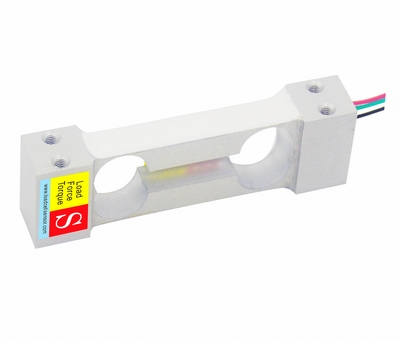

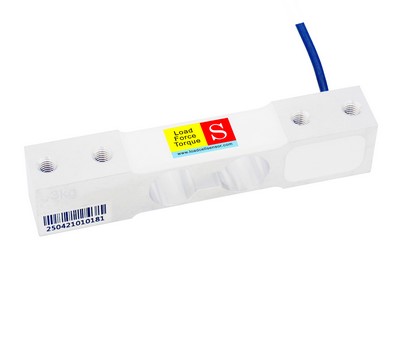


What is a single point load cell?
Single point load cells are designed to measure weight accurately on platforms where the load may be positioned away from the center. Their mechanical structure allows the weighing system to compensate for eccentric loading and maintain consistent output across different loading positions. This makes them suitable for retail scales, bench scales, industrial weighing equipment, checkweighers, and other compact platform systems that can operate with one sensing element instead of multiple sensors installed at each corner.
A precision-machined aperture in the elastic body controls the geometry and thickness of the metal at different sections, determining the rated capacity, sensitivity, and resistance to off-center loading. As a result, an off-center load cell can provide stable measurement even when the applied weight is not directly above the sensing area. Different dimensions and mounting configurations are available to accommodate various platform sizes, mechanical layouts, and installation requirements.
The sensing element can be manufactured from aluminum, alloy steel, or stainless steel according to capacity and operating conditions. Aluminum is commonly used for lightweight, low-capacity weighing applications, while alloy steel offers greater mechanical strength for medium- and higher-capacity systems. Stainless steel provides excellent corrosion resistance and is well suited for equipment exposed to moisture, frequent cleaning, or demanding industrial environments. For space-constrained instruments, a miniature weight sensor can provide accurate measurement while minimizing overall system size and weight.
Strain gauges are bonded to carefully machined areas of the elastic element and connected in a Wheatstone bridge circuit. When the body undergoes slight deformation under load, the gauges produce a millivolt-level signal proportional to the applied force. The output can then be connected to a weighing indicator, amplifier, PLC, transmitter, or data acquisition system for conversion into a readable weight value. A micro load cell can use a similarly strain-gauge-based principle while offering a compact footprint for precision instruments and embedded weighing applications.
LCS offers models with capacities from 30 g to 1000 kg, accuracy up to 0.02% of full scale, and ingress protection up to IP68. Custom options are available for dimensions, rated capacity, materials, mounting configuration, cable length, and electrical output to meet specific OEM and industrial weighing requirements.